

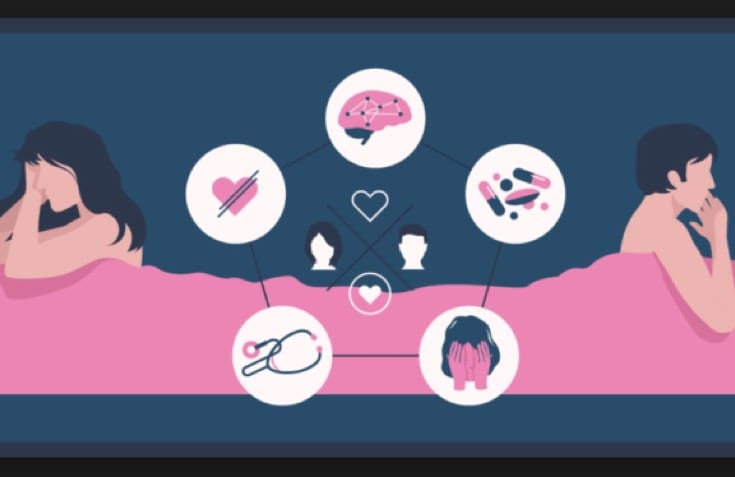
The sexual dysfunction section in the Diagnostic and Statistical Manual of Mental Disorders, 5th ed. (DSM-5) has several sub-categories (American Psychiatric Association, 2013). According to the American Psychiatric Association (APA), some categories in the sexual dysfunction section of the DSM-5 are differentiated between male and female specific dysfunctions or disorders (2013). Sexual dysfunctions and disorders generally describe a person who is unable to experience healthy sexual functioning in a pleasurable and positive way (APA, 2013). It is not uncommon for an individual to suffer from multiple diagnoses within the various sub-categories in the sexual dysfunction category (APA, 2013). It is important during assessment to for a clinician to identify whether a client meets the criteria for one, or many sexual dysfunctions (APA, 2013). As part of thorough assessment it is critical during a client in-take to identify the onset of the dysfunction(s) and the longevity (APA, 2013). Additional factors necessary for successful treatment include in-take regarding any current or past partnerships, cultural or religious beliefs which may contribute to the dysfunction(s), comorbid conditions such as depression, current life-situations that may exacerbate the client’s sexual issues, negative core beliefs, such as poor body image, and any history of abuse, especially sexual (APA, 2013). Sexual dysfunction often includes individual as well as couples treatment plans (APA, 2013).
An Overview of Sexual Dysfunctions
Delayed Ejaculation
Delayed ejaculation is a sexual disorder specifically impacting the male population. According to the DSM-5, the client must express an issue with ejaculation in most cases where he is sexually intimate (APA, 2013). Delayed ejaculation also includes infrequent, or a complete absence of ejaculation (APA, 2013). In order to meet the entire DSM-5 criteria for this disorder, the client must demonstrate distress over the condition (APA, 2013). As with all sexual dysfunctions, it is the responsibility of the clinician to identify during initial assessment whether or not the condition may be better explained as a consequence of a non-sexual disorder or life-situation (APA, 2013). The condition needs to be present for at least 6 months; delayed ejaculation is the least common sexual complaint within the sexual dysfunction categories, which apply to males (APA, 2013).
Erectile Disorder
Erectile disorder may be described by one or more of the following complaints: consistent inability to have an erection during sexual intimacy, consistent inability to maintain an erection during sexual activity and/or a consistent change from a functioning erection to a more flaccid erection, during time of sexual activity (APA, 2013). For the duration of at least 6 months, this condition must present as causing substantial distress to the male client (APA, 2013). Age can be a sizable factor in this disorder; men who are 60 appear to be more susceptible to erectile disorder (APA, 2013). According to the DSM-5, erectile disorder may only occur with certain partners, or during certain sexual activity or stimulation between partners (APA, 2013). As with all sexual dysfunctions, an expansive etiology must be gathered during in-take for the development of an all inclusive treatment plan (APA, 2013).
Female Orgasmic Disorder
According to the DSM-5, female orgasmic disorder is coined by a lack of orgasm, or infrequent or reduced intensity of orgasm. It is common that most women need direct clitoral stimulation to reach orgasm, women who cannot reach orgasm during traditional intercourse alone do not meet the criteria for female orgasmic disorder (APA, 2013). In instances were severe situational stress has been incurred within a partnership, which results in the inhibition of female orgasm; a diagnosis of female orgasmic disorder would not be applied (APA, 2013). In many cases, it is difficult if not impossible to identify the exact cause of female orgasmic disorder (APA, 2013).
Female Sexual Interest/Arousal Disorder
A difference between rates of desire between partners does not justify a diagnosis in this category (APA, 2013). A common factor involved in women who experience this disorder is a lack of responsive desire APA, 2013). Personal distress in the female must be reported as part of the diagnostic criteria (APA, 2013). Sexual desire normally ebbs and flows, an additional criterion is an absence of interest/arousal has been consistency reported for at least 6 months (APA, 2013). Women diagnosed with female sexual interest/arousal disorder also commonly complain of painful intercourse (APA, 2013). A lack of sexual fantasy may also be a part of this dysfunction (APA, 2013).
Genito-Pelvic/Penetration Disorder
The DSM-5 states that genito-pelvic/penetration disorder is a female sexual dysfunction where a woman has reoccurring issues with pain during intercourse (APA, 2013). Pain upon penile insertion, a tensing of the pelvic muscles, and/or anxiety about painful intercourse all describe the sexual dysfunction present in this disorder (APA, 2013). Typically this disorder is associated with a high amount of personal distress, because of this; only one symptom needs to be present to make a diagnosis (APA, 2013). Sometimes this condition is so severe that is interferes with the ability for a woman to become pregnant, because frequency of sexual intercourse is so low (APA, 2013). According to the DSM-5, it is estimated that 15% of women report having issues with pain during intercourse (APA, 2013).
Male Hypoactive Sexual Desire Disorder
Along with a lack of sexual desire, an absence of sexual fantasy may also accompany this diagnosis (APA, 2013). This diagnosis is often comorbid with erectile disorder, and may be considered a consequence of the personal distress caused by a male who is unable to perform sexually with his partner (APA, 2013). Age must be considered as a key factor for men especially over the age of 66 (APA, 2013). A sizable cultural difference has been noted between Northern European men compared to Asian men (APA, 2013). Estimated prevalence of hypoactive sexual desire disorder is estimated at 12.5% with the Northern European male population, and is 28% within the Asian male population (APA, 2013). It is postulated that negative core beliefs such as guilt and shame may be the cause of the higher prevalence in the Asian populations (APA, 2013).
Premature (Early) Ejaculation
Premature (early) ejaculation occurs within one minute after vaginal insertion, and does not include early ejaculation during non-vaginal sexual activity (APA, 2013). The DSM-5 states that the ejaculation must be unintentional to meet criterion for this dysfunction, and cause distress for the male experiences this unwanted occurrence (APA, 2013). The DSM-5 notes that this sexual dysfunction may be more common in men who also have been diagnosed with an anxiety disorder (APA, 2013). Specifically, social anxiety disorder may be correlated to premature (early) ejaculation (APA, 2013). Men who experience this disorder often suffer from low self-esteem and partners suffer from low relationship satisfaction (APA, 2013).
Substance/Medication-Induced Sexual Dysfunction
Prescription, illegal and legal yet abused drugs can cause sexual dysfunction (APA, 2013). Antidepressants can make it impossible for women to achieve orgasm (APA, 2013). Intoxication of alcohol can make a man unable to have an erection during partner sex (APA, 2013). Illegal drugs, such as cocaine, can also cause sexual disorders (APA, 2013). The DSM-5 states that withdrawal from certain drugs can also prolong or induce sexual dysfunction (APA, 2013). It is important for clinicians to identity any illegal drug use, certain prescription drugs or substance abuse upon client in-take, to assess whether sexual dysfunction is a consequence of outside medication-induced factors (APA, 2013).
Other Specified Sexual Dysfunction & Unspecified Sexual Dysfunction
Other specified sexual dysfunction is utilized when a client does not fully meet the criterion for any one specific sexual disorder; yet sexual dysfunction is present on some level (APA, 2013). Unspecified sexual dysfunction is used for a client who may present sexual dysfunctions that do not fit into any of the above-specified categories of disorders (APA, 2013). It may be possible, that over the course of therapeutic treatment, a specific diagnosis becomes evident as additional information is gathered from the client. In some cases, a client may have a sexual dysfunction that has not been properly researched and validated within the psychological community and literature. An example of this would be persistent genital arousal disorder, a sexual dysfunction that has received minimal attention. Persistent genital arousal disorder is a rare sexual dysfunction where unwanted and uncontrollable genital arousal continuously occurs (Goldstein, 2013).
Potential Causes of Sexual Dysfunctions
Genetic, Neurobiological & Psycho/Social Factors
Clayton and Groth discuss sexual dysfunctions as a multifactorial, neurobiological and psychosocial driven disorders that also can have a hormonal aspect (2014). In order for sexual dysfunction to remit, all aspects of etiology must be investigated and treated (Clayton & Groth, 2014). Specifically among women, genetic factors have been given a 30% variance, while environmental factors carried a higher rate of 70% (Clayton & Groth, 2014). Clayton and Groth state that neurotransmitters also can cause sexual inhibition (2014). Jahan, Billah, Furuya and Watanabe (2012) noted that mental stress is correlated with female sexual disorders. Baldwin and Foong (2013) state that individuals with conditions such as depression are more likely to suffer from sexual dysfunctions. Clients diagnosed with depressive disorders have also been found to report hypo-sexual dysfunction, male erectile dysfunction and female orgasmic disorder (Baldwin & Foong, 2013). Anxiety has also been found to correlate with sexual dysfunction (Pereira, Arias-Carrión, Machado, Nardi & Silva, 2013).
Negative core beliefs or maladaptive schemas have been clinically identified as contributing to the development of sexual dysfunctions in both men and women (Chang, Klein & Gorzalka, 2013). According to Gomes and Nobre (2012), schemas related to sex and romantic relationships trigger a positive or negative set of thoughts, emotions and behaviors related to sexual intimacy. Individuals who hold limiting, unrealistic, false or inflexible sexual core beliefs or expectations have been found to have various sexual dysfunctions (Gomes & Nobre, 2012). Cognitive structures have been found to play a critical role in the sexual functioning of men and women (Gomes & Nobre, 2012). Cognitive belief systems are most likely created during childhood and adolescence, then impacting adult men and women in couple hood, for better or worse (Gomes & Nobre, 2012). A cold, detached and rejecting family of origin may be at the root of maladaptive schemas present in those with sexual dysfunctions (Oliveira and Nobre, 2012). Women who struggle with poor body image have been found to also suffer from female orgasmic disorder. Women with negative age-related beliefs, such as, “sex is for young people” have been associated with low sexual desire and also vaginismus (Chang, Klein & Gorzalka, 2013).
Negative core beliefs have also been found to impact men in the area of sexual functioning (Chang, Klein & Gorzalka, 2013). Men who hold the core belief that expressing their feelings is not masculine have been found to have unsatisfying sexual relationships with their partners, accompanied by various sexual disorders (Chang, Klein & Gorzalka, 2013). Men who believe the expression of feelings is unmanly are not known to communicate their sexual preferences or needs to their partners, which can lead to sexual dysfunctions (Chang, Klein & Gorzalka, 2013). Men who believe successful sexual encounters must end with both female and male orgasm, also have been correlated to higher rates of sexual dysfunction (Chang, Klein & Gorzalka, 2013). Women with conservative beliefs, such as, “men must always initiate sex” are found to have higher chances of developing sexual disorders (Chang, Klein & Gorzalka, 2013). For men and women, high performance beliefs, such as, “women can easily be sexually aroused” cause spectatoring, when one is emotionally and spiritually removed from the act of sex causing orgasm disorders and lack of sexual arousal (Chang, Klein & Gorzalka, 2013). Another consequence for men with performance only focused beliefs is erectile dysfunction (Chang, Klein & Gorzalka, 2013).
Drug Induced Dysfunction
Antidepressant medication treatment has been found to cause sexual dysfunction in up to 45% of patients (Baldwin & Foong, 2013). Treatment-related sexual dysfunction, such as the inability for females to achieve orgasm, has been reported by patients (Baldwin & Foong, 2013). Low sexual desire and arousal in both male and female patients has also been reported (Baldwin & Foong, 2013). Alcohol intoxication has also been known to cause an inability to function sexually for men (APA, 2013). Illegal drug use, such as cocaine, has also been found to cause sexual dysfunction in men (APA, 2013).
Treatment for Sexual Dysfunction
Cognitive-Behavioral Therapy
Cognitive Behavioral therapy has been shown to promote changes in negative thought patterns and core beliefs (Pereira, Arias-Carrión, Machado, Nardi & Silva, 2013). Pereira, Arias-Carrión, Machado, Nardi and Silva (2013) noted a study that found 74% of women with a diagnosis of hypo-sexual disorder cured after a rigorous 12-week couples cognitive-behavioral therapy (CBT) program. The CBT couples program consisted of psychosexual couple’s education, improving communication, cognitive restructuring, positive reinforcement techniques and how to incorporate sexual fantasy into couple’s sexual activity (Pereira, Arias-Carrión, Machado, Nardi & Silva, 2013). The group receiving treatment reported greater levels of marital and sexual satisfaction compared to the control group (Pereira, Arias-Carrión, Machado, Nardi & Silva, 2013). Another study found significant improvement after CBT treatment with a group of women diagnosis with genito-pelvic pain/penetration disorder (Pereira, Arias-Carrión, Machado, Nardi & Silva, 2013). In a study that tested topical pharmacological treatment for women with vestibulodynia (burning sensations at the vaginal entrance) to CBT found that although both treatments were effective, only the CBT treatment produced prolonged results after termination of the program (Pereira, Arias-Carrión, Machado, Nardi & Silva, 2013). CBT has also been successfully utilized for the reduction of anxiety in clients with sexual dysfunction (Pereira, Arias-Carrión, Machado, Nardi & Silva, 2013).
Mindfulness-Based Cognitive Therapy
Mindfulness therapy, which incorporates meditation practices were correlated with an increase response to sexual stimuli in a female population diagnosed with sexual dysfunction (Pereira, Arias-Carrión, Machado, Nardi & Silva, 2013). Mindfulness therapy has also been successful use for women suffering from female sexual arousal disorder (Silverstein, Brown, Roth & Britton, 2011). In the study conducted by Silverstein, Brown, Roth and Britton (2011), women were psychologically disconnected from the physiological sexual response of their bodies. Mindfulness-based therapy was utilized to increase interoceptive awareness, which is the ability to connect the subjective experience of sexual arousal with the physiological state. The mindfulness training was found to increase the ability for this group of women to register their internal bodily sexual sensations (Silverstein, Brown, Roth & Britton, 2011). Along with an increase in subjective responsiveness to the sexual arousal of their bodies, the women also experienced a decrease in anxiety, negative self-talk and depressive symptoms (Silverstein, Brown, Roth & Britton, 2011).
Couples/Sex Therapy
Part of a proper assessment includes discussion about the partner of the individual who is presenting with sexual dysfunction (APA, 2013). According to Jahan, Billah, Furuya and Watanabe (2012) found that women who were married to husband’s with sexual dysfunction had a higher rate of having a sexual disorder compared to women who were married to men without a presenting sexual issue. This is why a collaborative approach to therapy is preferred where possible, incorporating the couple along with individual treatment for the most lucrative outcome (Jahan, Billah, Furuya & Watanabe, 2012). Sex therapy has been shown to positively impact women’s self-esteem (Pereira, Arias-Carrión, Machado, Nardi & Silva, 2013). In a study where couples therapy was combined with sex therapy, and compared against a group only receiving couples therapy, the outcome showed that the group with duel-treatment of marital and sex therapy had higher success in the reduction of sexual dysfunction (Pereira, Arias-Carrión, Machado, Nardi & Silva, 2013).
Pharmacological Treatment Considerations
The most common pharmacological treatment for males with premature ejaculation disorder is the prescription drug clomipramine, or any serotonin reuptake inhibitors (Baldwin & Foong, 2013). For women, flibanserin and bremelanotide are two pharmacological treatments proposed to treat low sexual desire (Berry & Berry, 2013). Sexuopharmaceutical treatments are relatively new, and viewed by the therapy community as a compliment to the biopsychosocial models of treatment for sexual dysfunctions (Berry & Berry, 2013). Short-term pharmacological treatment is proving effective, but the intention of Sexuopharmaceutical treatment is not intended for long-term treatment (Berry & Berry, 2013). The psychological community supports with mixed feelings an integrated therapeutic approach, which includes the use of medication when necessary (Berry & Berry, 2013; Jahan, Billah, Furuya & Watanabe, 2012).
Sexual Dysfunctions & Spirituality
Negative early maladaptive schemas have been shown to play a substantial role in the cause of sexual dysfunctions. Many negative core beliefs around sex and the marital relationship can be attributed to abuse and/or misinterpretation of Christian scripture. For clients with a Christian background, and even other religious backgrounds that may have indoctrinated followers with negative and/or limited core beliefs around sexuality and the marital relation, spiritual cognitive retraining may be necessary. Scripture, which may have been intentionally, or unintentionally damaging, such as verses that encourage wives to submit to their husbands, must be reframed in a context that promotes healthy sexuality and mutual marital living. Christians who hold a view that sex is only for procreation, not for pleasure or intimate connection with their spouse, also need to be re-educated using scripture that captures God’s blessing on the positive sexual unity between husband and wife. Misplaced guilt and shame around healthy sexual behavior can be toxic to healthy sexual functioning. Other obstacles for many Christians can be a rigid view of what is considered acceptable sexual activity. A thorough review of scripture with the client may help alleviate any spiritual core beliefs passed down that are not truly in line with the spirit in which God created husband and wife to experience sexual unity.
Future Research Recommendations
Future research recommendations may include the use of yoga and pelvic massage for genito-pelvic penetration/pain disorder. Also, a combination approach utilizing mindfulness-based therapy for couples as well as individuals. In the study for genito-pelvic penetration/pain disorder, only 33% of the group reported the ability to have sexual intercourse at the end of treatment. The fear-factor associated with this disorder, because of the severe pain that often accompanies the dysfunction, most likely makes this group a special challenge. Additional therapeutic techniques, such as hypnosis, deep relaxation techniques, masturbation and fantasy training or the temporary use of anti-anxiety medications could be explored. All other disorders in the sexual dysfunction category are associated only with psychological distress, not physical pain. It makes this sub-category especially important to target for improved treatments.
Conclusion
Sexual dysfunctions come in many forms for both men and women, often having cross-diagnosis for men and women, within the various sub-categories. Human beings are created to experience healthy sexuality within the partnership of marriage. The inability to express oneself sexually within the marriage can cause emotional, physical and spiritual distress. The causes of sexual disorders are as varied as the sub-categories. Bio/psycho/social causes are found to be present and most often entwined with one another. Combinations of factors such as genetic predisposition, neurobiological malfunctions and negative early maladaptive schemas can all play a role in the creation of sexual disorders. The complexity of these disorders are further complicated by the fact that it is played out in a partnership between to individuals. This fact makes thorough client in-take and intricate treatment planning critical to remission of a disorder. The partner of the presenting client is usually just as important and key to treatment of dysfunction. CBT, mindfulness therapy, marital counseling, sex therapy and psychotropic medications have all been found to be effective methods of treatment. A client-specific integrated treatment plan should be developed, which includes the partner as well. The future of sexual disorder treatment looks bright, as stigmas associated with sex have been lifted from society, and the abuse of sexuality appears to be driving couples to find healthy ways to heal from dysfunctions and express themselves in cooperative, mutually satisfying partnerships.
References
American Psychiatric Association. (2013). Diagnostic and statistical manual of mental disorders: DSM-5 (5th ed.). Washington, DC: American Psychiatric Publishing. ISBN: 9780890425558.
Baldwin, D. & Foong, T. (2013). Antidepressant drugs and sexual dysfunction. The British Journal of Psychiatry, 202, 396–397. doi: 10.1192/bjp.bp.112.110650
Berry, M., & Berry, P. (2013). Contemporary treatment of sexual dysfunction: Reexamining the biopsychosocial model. J Sex Med, 10,2627–2643. doi:10.1111/jsm.12273
Chang, S., Klein, C., & Gorzalka, B. (2013). Perceived prevalence and definitions of sexual dysfunction as predictors of sexual function and satisfaction. Journal of Sexual Research, 50, 5, 502–512.doi: 10.1080/00224499.2012.66148
Clayton, A. & Groth, J. (2014). Etiology of female sexual dysfunction. Future Medicine Ltd., 9, 2, 135-7. doi: http://dx.doi.org/10.2217/whe.13.6
Goldstein, I. (2013). Persistent genital arousal disorder: Update on the monster sexual dysfunction.J Sex Med, 10, 2357–2358.
Gomes, A. & Nobre, P. (2012). Early maladaptive schemas and sexual dysfunction in men. Arch Sex Behav, 41, 311–320. doi: 10.1007/s10508-011-9853-y
Jahan, M., Billah, S., Furuya, H., & Watanabe, T. (2012). Female sexual dysfunction: Facts and factors among gynecology outpatients. J. Obstet. Gynaecol. Res. 38, 1,329-335. doi: 10.1111/j.1447-0756.2011.01648.x
Oliveira, C. & Nobre, P. (2012). Cognitive structures in women with sexual dysfunction: The role of early maladaptive schemas. J Sex Med, 10, 1755–1763.
Pereira,V., Arias-Carrión, O., Machado, S., Nardi, A. & Silva, A. (2013). Sex therapy for female sexual dysfunction. Pereira et al. International Archives of Medicine, 6, 37.doi: http://www.intarchmed.com/content/6/1/37
Silverstein, R., Brown, A., Roth, H. & Britton, W. (2011). Effects of mindfulness training on body awareness to sexual stimuli: Implications for female sexual dysfunction. Psychosomatic Medicine, 73, 817-825.doi: 0033-3174/11/7309–0817